Notice of Unknown Service Line Material
King County Water District No. 119 wants to inform you of an important matter concerning the water service
line serving your home. We are focused on protecting the health of every household in our community.
As part of our ongoing efforts to ensure the safety and quality of the drinking water supply, we have recently
completed a survey of service lines within the community to determine the types of piping materials used. Based
on the survey the District has determined that the water pipe (called a service line) that connects your home,
building or other structure to the water main is made from unknown material and may be lead. Because your
service line material is unknown, there is the potential that some or all of the service line could be made of lead or
galvanized pipe that was previously connected to lead. People living in homes with a lead or galvanized pipe
previously connected to a lead service line have an increased risk of exposure to lead from their drinking water.
Please share this information with anyone who drinks and/or cooks using water at this property.
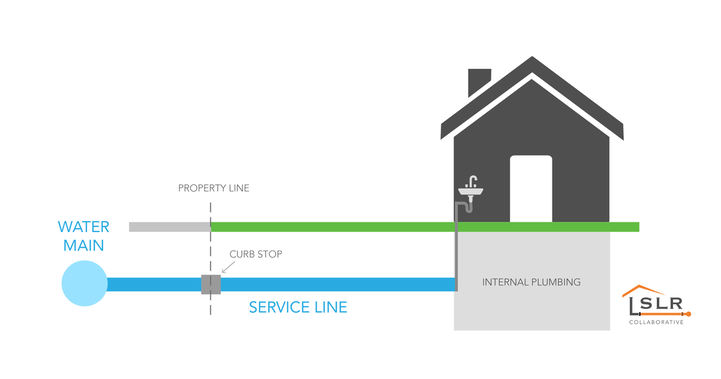
Identifying Service Line Material
To help determine the material of your service line, please please investigate your water service line or contact a
licensed plumber for assistance. EPA has developed an online step-by-step guide to help people identify lead
pipes in their homes: Protect Your Tap: A Quick Check for Lead. You can also contact our office by phone (425-788-2885) or by email
(office@wd119.org) for additional information.
You can use the attached survey form to report back to us the results of your pipe material determination. We are required
send this notice until the material of your service line can be verified. Please fill in all information.
Health Effects of Lead
Exposure to lead in drinking water can cause serious health effects in all age groups. Infants and children can have
decreases in IQ and attention span. Lead exposure can lead to new learning and behavior problems or worsen existing
learning and behavior problems. The children of women who are exposed to lead before or during pregnancy can
have increased risk of these negative health effects. Adults can have increased risks of heart disease, high blood
pressure, and kidney, or nervous system problems.
Steps to Reduce Lead in Drinking Water
Below are recommended actions that you may take, separately or in combination, if you are concerned about lead in
your drinking water. The list also includes where you may find more information. It is not intended to be a complete list.
It does not imply that all actions equally reduce lead in drinking water.
Use your filter properly. Using a filter can reduce lead in drinking water. If you use a filter, it should be certified to
remove lead. Read any directions provided with the filter to learn how to properly install, maintain, and use your cartridge
and when to replace it. Using the cartridge after it has expired can make it less effective at removing lead. Do not run
hot water through the filter. For more information on facts and advice on home water filtration systems, visit EPA’s filters
to reduce lead website.
Clean your aerator. Regularly remove and clean your faucet’s screen (also known as an aerator). Sediment, debris, and
lead particles can collect in your aerator. If lead particles are caught in the aerator, lead can get into your water.
Use cold water. Do not use hot water from the tap for drinking, cooking, or making baby formula as lead dissolves more
easily into hot water. Boiling water does not remove lead from water.
Run your water. The more time water has been sitting in pipes providing water to your home, the more lead it may
contain. Before drinking, flush your home’s pipes by running the tap, taking a shower, doing laundry, or doing a load of
dishes. The amount of time to run the water will depend on whether your home has a lead service line or not, as well as
the length and diameter of the service line and the amount of plumbing in your home. Residents may contact us by phone (425-788-2885) or by email (office@wd119.org) for recommendations about flushing times in their community.
Learn about construction in your neighborhood. Contact us to find out about any construction or maintenance work
that could disturb your service line. Construction may cause more lead to be released from a lead service line or
galvanized service line if present.
Have your water tested. You may contact a certified laboratory to have your water tested for lead. A partial list of
certified laboratories follows:
- AMTest. 1131 SW 7th Street, Renton WA 98057. (425) 885-1664
- Analytical Resources. 4611 S 134th Place, Suite 100, Tukwila, WA 98168. (206) 695-6200
- NVL Labs. 18000 International Blvd S. Suite 415, SeaTac, WA 98188. (206) 547-0100
- OnSite Environmental, Inc. 14648 NE 95th Street, Redmond, WA 98052. (425) 883-3881
Note, a water sample may not adequately capture or represent all sources of lead that may be present.
Visit EPA’s basic information webpage for information on sources of lead that include service lines and interior plumbing.
Test Your Child to Determine their Blood Lead Levels
A family doctor or pediatrician can perform a blood test for lead and provide information about the health effects of
lead. State, city, or county departments of health can also provide information about how you can have your child’s
blood tested for lead. The Centers for Disease Control and Prevention recommends public health actions when the level
of lead in a child’s blood is 3.5 micrograms per deciliter (µg/dL) or more.
Visit EPA’s Basic Information website for more information and links to CDC’s website.
If you are planning on replacing the portion of the service line that you own, please notify us. Financial assistance may
be available from other sources. For more information on reducing lead exposure from your drinking water and the
health effects of lead, visit EPA’s Lead website.
Download this notification as a PDF:
Download the survey form to report back to us the results of your pipe material determination: