Recent News

Unknown Service Line Notification

Notice of Unknown Service Line Material

King County Water District No. 119 wants to inform you of an important matter concerning the water service
line serving your home. We are focused on protecting the health of every household in our community.

As part of our ongoing efforts to ensure the safety and quality of the drinking water supply, we have recently
completed a survey of service lines within the community to determine the types of piping materials used. Based
on the survey the District has determined that the water pipe (called a service line) that connects your home,
building or other structure to the water main is made from unknown material and may be lead. Because your
service line material is unknown, there is the potential that some or all of the service line could be made of lead or
galvanized pipe that was previously connected to lead. People living in homes with a lead or galvanized pipe
previously connected to a lead service line have an increased risk of exposure to lead from their drinking water.
Please share this information with anyone who drinks and/or cooks using water at this property.
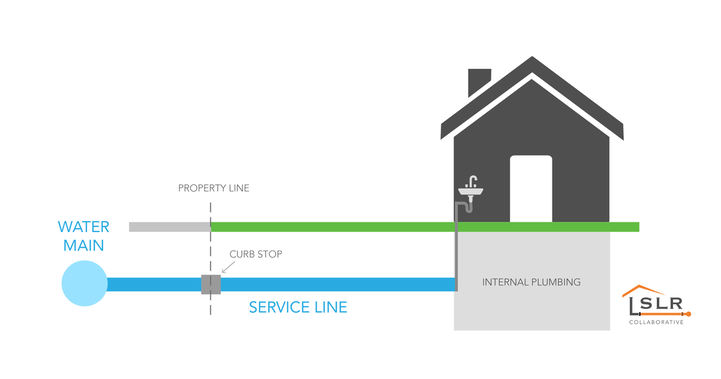
Illustration of the water service line, which connects the water main to the building's internal plumbing.

Identifying Service Line Material

To help determine the material of your service line, please please investigate your water service line or contact a
licensed plumber for assistance. EPA has developed an online step-by-step guide to help people identify lead
pipes in their homes: Protect Your Tap: A Quick Check for Lead. You can also contact our office by phone (425-788-2885) or by email
(office@wd119.org) for additional information.

You can use the attached survey form to report back to us the results of your pipe material determination. We are required
send this notice until the material of your service line can be verified
. Please fill in all information.


Health Effects of Lead

Exposure to lead in drinking water can cause serious health effects in all age groups. Infants and children can have
decreases in IQ and attention span. Lead exposure can lead to new learning and behavior problems or worsen existing
learning and behavior problems. The children of women who are exposed to lead before or during pregnancy can
have increased risk of these negative health effects. Adults can have increased risks of heart disease, high blood
pressure, and kidney, or nervous system problems.

Steps to Reduce Lead in Drinking Water

Below are recommended actions that you may take, separately or in combination, if you are concerned about lead in
your drinking water. The list also includes where you may find more information. It is not intended to be a complete list.
It does not imply that all actions equally reduce lead in drinking water.

Use your filter properly. Using a filter can reduce lead in drinking water. If you use a filter, it should be certified to
remove lead. Read any directions provided with the filter to learn how to properly install, maintain, and use your cartridge
and when to replace it. Using the cartridge after it has expired can make it less effective at removing lead. Do not run
hot water through the filter. For more information on facts and advice on home water filtration systems, visit EPA’s filters
to reduce lead website
.

Clean your aerator. Regularly remove and clean your faucet’s screen (also known as an aerator). Sediment, debris, and
lead particles can collect in your aerator. If lead particles are caught in the aerator, lead can get into your water.

Use cold water. Do not use hot water from the tap for drinking, cooking, or making baby formula as lead dissolves more
easily into hot water. Boiling water does not remove lead from water.

Run your water. The more time water has been sitting in pipes providing water to your home, the more lead it may
contain. Before drinking, flush your home’s pipes by running the tap, taking a shower, doing laundry, or doing a load of
dishes. The amount of time to run the water will depend on whether your home has a lead service line or not, as well as
the length and diameter of the service line and the amount of plumbing in your home. Residents may contact us by phone (425-788-2885) or by email (office@wd119.org) for recommendations about flushing times in their community.

Learn about construction in your neighborhood. Contact us to find out about any construction or maintenance work
that could disturb your service line. Construction may cause more lead to be released from a lead service line or
galvanized service line if present.

Have your water tested. You may contact a certified laboratory to have your water tested for lead. A partial list of
certified laboratories follows:

  • AMTest. 1131 SW 7th Street, Renton WA 98057. (425) 885-1664
  • Analytical Resources. 4611 S 134th Place, Suite 100, Tukwila, WA 98168. (206) 695-6200
  • NVL Labs. 18000 International Blvd S. Suite 415, SeaTac, WA 98188. (206) 547-0100
  • OnSite Environmental, Inc. 14648 NE 95th Street, Redmond, WA 98052. (425) 883-3881

Note, a water sample may not adequately capture or represent all sources of lead that may be present.

Visit EPA’s basic information webpage for information on sources of lead that include service lines and interior plumbing.

Test Your Child to Determine their Blood Lead Levels

A family doctor or pediatrician can perform a blood test for lead and provide information about the health effects of
lead. State, city, or county departments of health can also provide information about how you can have your child’s
blood tested for lead. The Centers for Disease Control and Prevention recommends public health actions when the level
of lead in a child’s blood is 3.5 micrograms per deciliter (µg/dL) or more.

Visit EPA’s Basic Information website for more information and links to CDC’s website.

If you are planning on replacing the portion of the service line that you own, please notify us. Financial assistance may
be available from other sources. For more information on reducing lead exposure from your drinking water and the
health effects of lead, visit EPA’s Lead website.


Download this notification as a PDF:

Download the survey form to report back to us the results of your pipe material determination:

Monthly Newsletter: March 2025

Fix leaks, save water

Leaks waste up to 12% of all water used at home. Yikes! That’s almost as much water as most homes use doing laundry each year.
Check your home for the most common types of leaks. When we all work together to use water wisely it adds up to make a big difference.

  1. Learn the signs of a running toilet. If you hear or see your toilet tank refilling in between flushes or if you need to jiggle the handle to stop the toilet water from running, you have a leak.
  2. Check your toilet’s flapper. A worn-out flapper (the rubber valve at the bottom of the tank) can cause a silent leak. Open the tank and see or feel the flapper for signs of wear.
  3. Take care of faucet and shower drips. Dripping faucets and showerheads can add up. Just one drop every 2 seconds wastes more than 1,000 gallons per year.
  4. Check your water bill. Pick a month like January or February when you didn’t use water outdoors. If a family of four uses more than 9,000 gallons or 12 CCFs of water in a month, you may have a leak.
  5. Find hidden leaks with your water meter. Read your water meter before and after a two-hour period when no one is using water. If the number changes, you may have a leak. To learn more about using your water meter to find leaks visit savingwater.org.

Finding and fixing leaks are impactful actions you can take to prevent water waste. In a single day, a running toilet can waste as much water as taking 15 showers. Find videos, tips, and tools online at SavingWater.org


We’re hiring

We have an opening for a part-time office clerk to join our team! Information is posted on our website or contact Roxanne at the office.


Foundations for Water-Efficient Landscapes: Build Healthy Soil

Healthy soil holds enough water and nutrients for optimal plant health. This means you don’t have to run the sprinkler as often to keep your landscape looking vibrant and beautiful.
The easiest way to grow healthy soil is to incorporate compost, add mulch to the surface, and if you need to, use organic fertilizers that will release nutrients slowly as plants need them.

Add compost to your soil before planting The best and easiest way to improve the soil is to add compost to the entire area before planting. Compost supplies nutrients to plants, and it improves the soil structure; it will loosen clay soils and help sandy soils hold more water.

  • Mix 2 – 3 inches (5 – 8 cm) of compost into garden beds, and 1 – 2 inches (3 – 5 cm) of compost to lawn areas before planting. Trees and shrubs prefer native soils so compost is unnecessary.
  • Do not try to fix poor soil conditions by bringing in new topsoil. This can often make poor soil conditions even worse. Instead, add compost which can help a broad range of soil problems.

Mulch existing plantings

Mulch is a material that is placed on top of the soil surface to regulate soil temperatures, conserve water, limit weed growth, and prevent soil erosion.

  • Spread mulch over compost and bare soil.
  • Keep mulch away from woody stems and tree trunks.
  • Reapply mulch annually, or as needed to keep soils covered.

Use organic fertilizers

Flowers, vegetables, and lawns sometimes need extra nutrients. Look for the words “organic” or “slow-release” on the fertilizer label. These products are released slowly by soil organisms. They supply nutrients to the plants throughout the growing season, and they are less likely to wash off into streams and lakes.

Rather than fertilizing on a schedule, observe plants to look for signs of deficiency and/or get your soil tested. Contact the King Conservation District or the Garden Hotline to learn more about soil testing. Testing is easier and less expensive than most people think.

Learn more about efficiently watering your garden and access other tips, tools, and rebates to help people preserve our region’s water for future generations at savingwater.org.


Dial 8-1-1

Know what’s below
Call before you dig

One free, easy call gets your utility lines marked AND helps protect you from injury and expense.

NOTE: Water District does not install water lines on private property; we will locate mains and meters only.

Customer Guidance on New Lead Regulations: Building a Water Service Line Inventory for Safety and Compliance

New regulations have tasked us with building an inventory of the types of water service lines within our District. This is to identify any risks in the water system that would adversely affect the health of our customers due to lead contamination, with the goal of prioritizing and removing these risks.

The latest government regulation deals with lead and requires all water utilities to assess their systems to ensure that there are no sources of lead on both the utility side of the meter AND the customer side of the meter. Please note that we have no records of and have never discovered lead lines on the District side of the service line.

The service line on the customer side of the meter is installed by the contractor that built the house and the District does not have any records on this since it is the customer’s responsibility to maintain. Service line materials vary; many older homes used galvanized pipe, while the newer homes used copper or HDPE.

Since we do not have records of your service line, we have previously requested information from you and may require additional information in order to comply with the EPA’s inventory requirements.

Washington Supreme Court rules that King County can charge ‘rent’ to utilities using County rights-of-way; increased utility rates expected

November 2016 King County enacted Ordinance 18403 which allows the County to charge rent’ to water, sewer, gas, and electric utilities for being in the roadways and easements (rights-of-way) pursuant to a franchise. The rent does not provide value or benefit to the utilities, instead it will go into the County’s General Fund. Water District 119 along with several other water and sewer districts took legal action to overturn Ordinance 18403, but unfortunately the Washington Supreme Court ruled in favor of the County in December 2019. The Court’s ruling will result in increases in your utility rates to cover the rent amounts being charged by the County. The specific impact to Water District 119 (WD119) rates are not known at this time because the amount of the rent required to be paid to the County is still undetermined and will be subject to future legal proceedings and/or negotiations. 

What happens next?

Based on a written compensation notice issued by King County to WD119, the County seeks to require WD119 to pay approximately $32,000 per year in rent for the use of County rights-of-way. Whatever the final rent amount is, it will be passed through to WD119 customers. Based on the County’s compensation notice, your water rates will be increased by $2.50 per month ($5.00 per billing cycle) which will be on your next bill.


The County has also recently confirmed its intention to charge WD119 retroactive rent that could go back to 2018, a cost that has not yet been passed on to WD119 customers. The monthly, ongoing charges outlined above do not cover the alleged retroactive obligation. This will equate to an assessment of approximately $50 per household. WD119 will have more information on this in the coming months. 

What can you do?

WD119 is currently evaluating its options. In the meantime, if you have concerns about the County’s Ordinance and Rules and the impact on your utility rates, please contact the King County Council members who have constituents located in unincorporated King County. Listed below are the email addresses and telephone numbers for the councilmembers representing unincorporated areas of the County: 

DistrictEmailPhonePosition
District 1​rod.dembowski@kingcountry.gov206-477-1001(A sponsor of the Ordinance) 
District 3kathy.lambert@kingcounty.gov206-477-1003(A sponsor of the Ordinance)
District 4jeanne.kohl-welles@kingcounty.gov206-477-1004(Supported the Ordinance)
District 5dave.upthegrove@kingcounty.gov206-477-1005(A sponsor of the Ordinance)
District 7peter.vonReichbauer@kingcounty.gov206-477-1007(Opposed the Ordinance)
District 8joe.mcdermott@kingcounty.gov​206-477-1008(Supported the Ordinance)
District 9reagan.dunn@kingcounty.gov206-477-1009(Opposed the Ordinance)

Note: Water District 119 is located in District 3. 


Board of Commissioners 
Water District 119